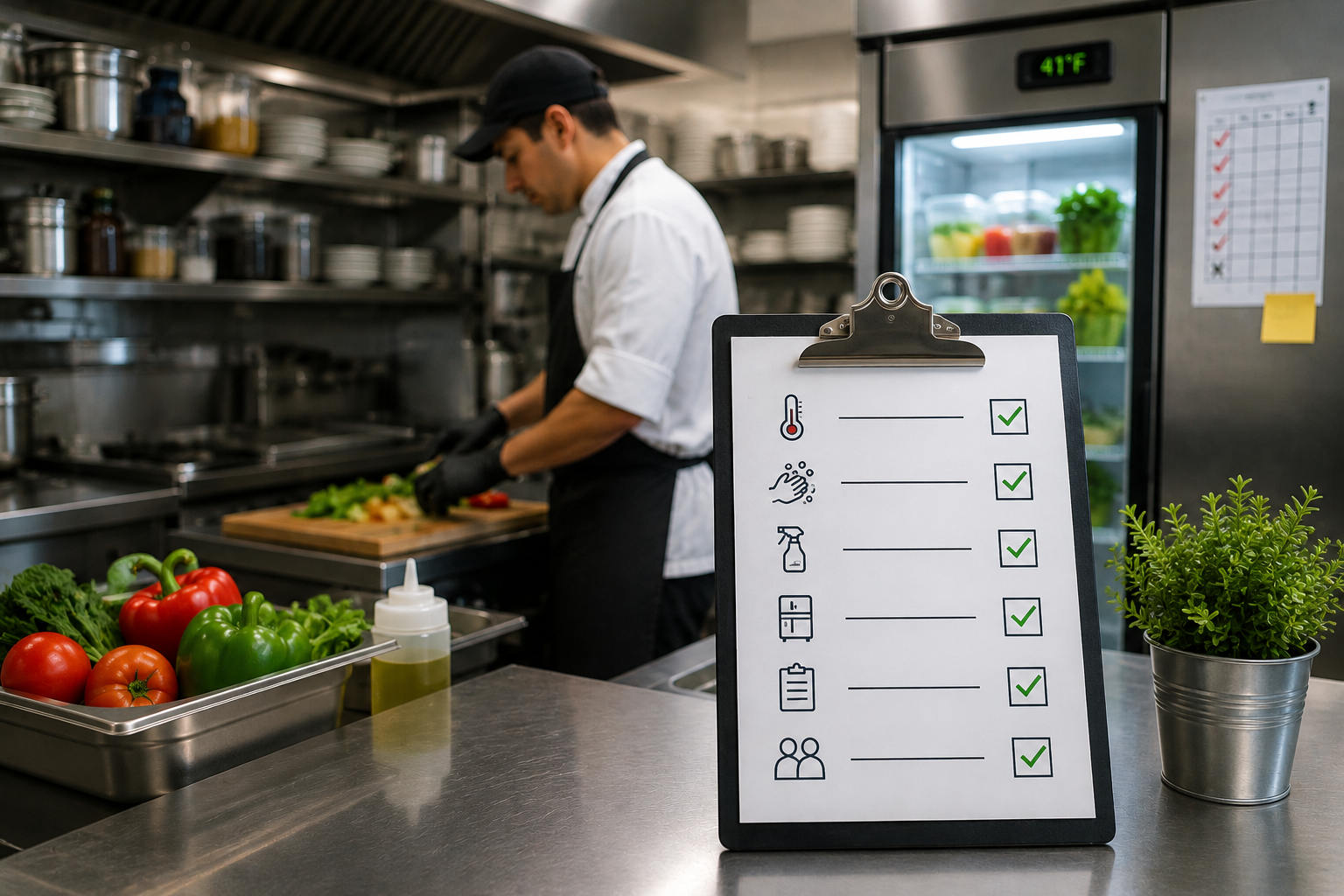
Seeing a strong inspection grade in a restaurant window can create a sense of confidence. But a passing grade doesn’t necessarily mean that every food-safety risk has disappeared.
An inspection is a snapshot in time. Restaurant operations happen every day.
An Inspection Only Shows One Moment
Imagine a restaurant receives an “A” grade on Monday.
The inspection confirms that the kitchen is operating within acceptable standards at that particular moment.
But what happens on Tuesday?
What happens when a new employee starts? What happens when the refrigerator temperature changes? What happens during a Friday night rush when staff are overwhelmed?
The conditions inside a restaurant can change significantly between inspections.
Compliance Is More Than a Grade
A passing inspection grade is important, but it should be viewed as one indicator of operational performance rather than the entire picture.
A restaurant can still have recurring issues such as:
- Missed temperature checks
- Incomplete cleaning tasks
- Expired products
- Improper food storage
- Missing documentation
- Inconsistent employee procedures
- Repeated corrective actions
These problems may not always appear during a particular inspection.
The Gap Between Inspections
One of the biggest compliance challenges restaurants face is what happens between inspections.
Employees may follow procedures carefully when management is watching, but consistency can decline over time.
Paper checklists can make this even harder because managers may not immediately know:
- Which tasks were missed
- Who completed a checklist
- Whether corrective action was taken
- Whether the same problem happened repeatedly
- Which areas require additional attention
Without reliable visibility, recurring problems can remain hidden.
Compliance Should Be Continuous
A modern food-safety program should operate every day, not only when an inspection is approaching.
Daily digital records can help restaurant managers track:
- Food temperatures
- Cleaning and sanitation
- Equipment checks
- Opening and closing procedures
- Employee tasks
- Corrective actions
More importantly, digital systems can make patterns easier to identify.
If the same refrigerator repeatedly records temperature issues, that’s not just another checklist entry. It may be a maintenance problem that needs attention.
From Inspection Preparation to Inspection Readiness
The difference is simple.
Inspection preparation means getting ready when an inspection is expected.
Inspection readiness means operating correctly every day.
Restaurants that build consistent food-safety processes don’t need to scramble when an inspector arrives. Their records, procedures, and corrective actions are already part of normal operations.
A passing grade is good.
But consistent compliance between inspections is what protects the business in the long run.